




BMET Career Path in 2026: Field Service vs. In-House vs. Manufacturer Direct — Pros and Cons
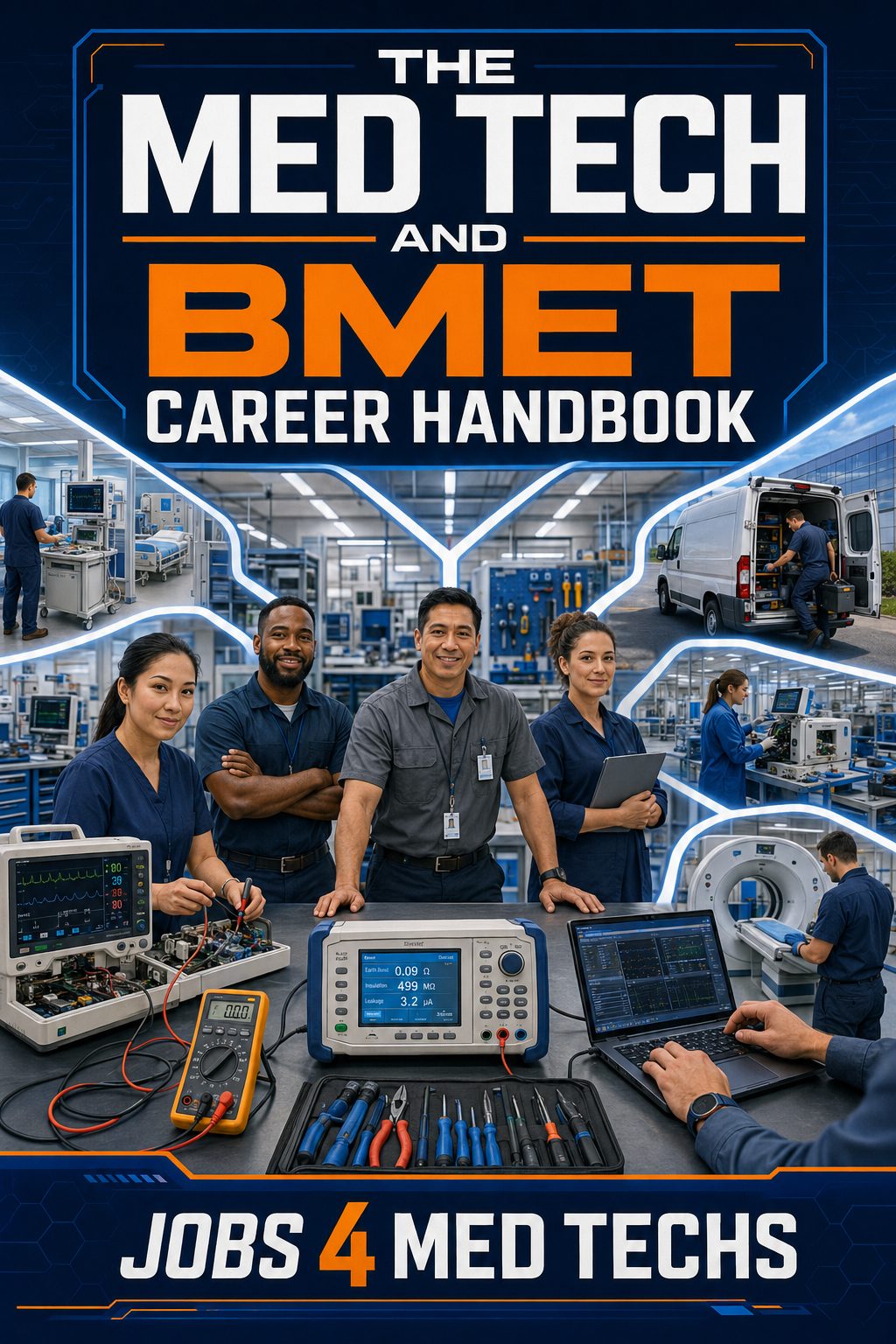
Biomedical equipment technicians — the people who keep infusion pumps, monitors, imaging systems, and lab analyzers safe and running — can build a career along three broad tracks, and each one shapes daily life differently. In-house roles embed you inside a hospital or health system, where you know the equipment intimately, respond fast, and grow toward supervisory or clinical-engineering management over time. The trade-off is a fixed site and a workload driven by that facility's inventory.
Field service points the other direction: a territory, a service vehicle, and a rotating set of customer sites. Autonomy and travel run high, compensation often reflects the added mobility and on-call demands, and the skill set skews toward efficient diagnosis across many environments. Manufacturer-direct roles sit with the original equipment makers, offering deep specialization on a specific product line, structured factory training, and clear technical ladders, at the cost of narrower breadth.
No single path is "best" — it depends on how you weigh stability, travel, specialization, and advancement. The U.S. Bureau of Labor Statistics projects strong demand for medical equipment repairers overall, and industry body AAMI is a useful reference for the certifications and competencies that map to each track. Verify current pay ranges and outlook with the BLS for your region before committing.
Sources: U.S. BLS — Medical Equipment Repairers Occupational Outlook; AAMI — Association for the Advancement of Medical Instrumentation